Envelope First
Air control, insulation, windows, moisture, and thermal continuity are reviewed before details are buried.


Ontario Markets
ConstructionX supports Ontario custom homes, additions, cottages, rural properties, lakefront sites, urban work, suburban work, management assignments, and rescue reviews with regional planning, building science discipline, and clear project control.
Ontario Project Fit
Ontario projects can move from lakefront cottages and rural acreage to urban infill, estate properties, suburban additions, and complex family space decisions. ConstructionX starts with the site, the season, the scope, and the level of control the project needs before budget pressure starts shaping the wrong decisions.
Winter performance, moisture control, approvals, access, trade coordination, drawings, owner decisions, and project clarity all matter. The work can be a new custom home, an addition, a suite, a performance upgrade, construction management, or a rescue review. The first step is making the regional reality visible.

Ontario work is planned around site, access, approvals, and long term performance from the first scope conversation.
Areas We Serve In Ontario Include, But Are Not Limited To
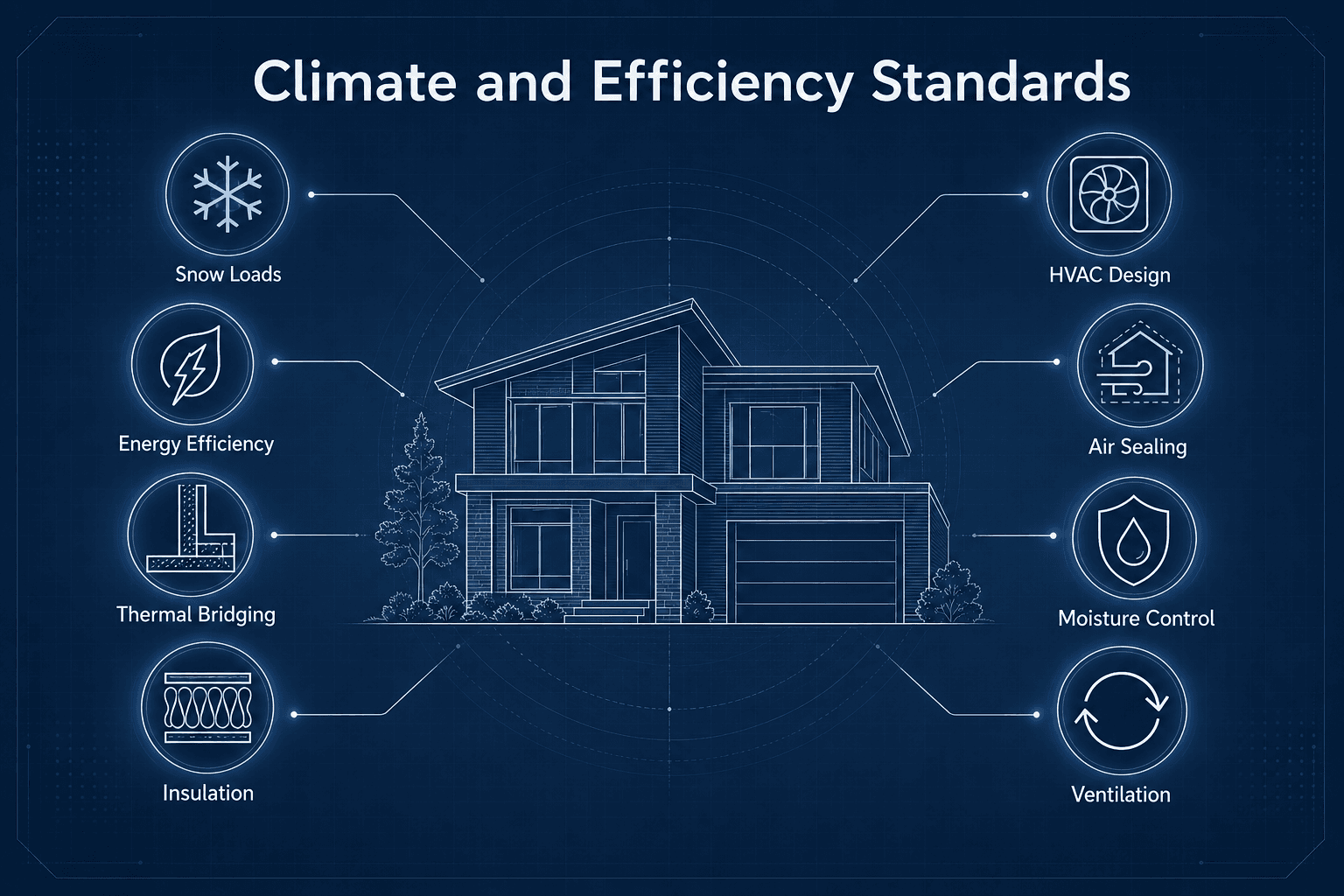
Efficiency is planned through coordinated decisions, not a slogan or one late product choice.
Comfort, durability, moisture control, and operating confidence stay visible before construction starts.
Air control, insulation, windows, moisture, and thermal continuity are reviewed before details are buried.
Heating, cooling, ventilation, controls, and envelope choices work together as one connected home system.
Climate And Efficiency Standards
ConstructionX has cared about climate performance, efficiency, durability, and practical building science long before better building became market language. For Ontario work, this means better early thinking around the shell, systems, comfort, moisture, and long term operating confidence.
Climate awareness belongs in custom homes, additions, suites, efficiency upgrades, construction management, construction rescue, and landscape construction coordination when those scopes apply. It is not social mandate copy. Early planning connects enclosure choices, mechanical coordination, site realities, schedule decisions, and owner confidence before construction pressure starts.
Better building science protects comfort, operating cost, maintenance, and long term confidence.
Performance choices stay tied to scope, budget, trades, schedule, owner priorities, and long term operating confidence.
Gaps and transitions are easier to plan before insulation, finishes, and mechanical work lock them away.
Comfort, moisture, energy use, and construction sequence stay connected through early enclosure decisions.
Air Sealing
Ontario homes can lose comfort through small gaps, penetrations, transitions, attic details, rim areas, and rushed enclosure work. ConstructionX treats air sealing as a planning item because drafts, heat loss, moisture movement, and room by room comfort issues become harder to correct once the project is closed in.
Transitions, penetrations, attic edges, rim areas, and service openings are reviewed before gaps become hidden comfort risks.
Better air control supports steadier rooms, fewer drafts, lower heat loss, and less moisture movement through the enclosure.
Energy Efficiency
Efficiency in Ontario is not one product or one late decision. It comes from the envelope, mechanical design, insulation, windows, air movement, detailing, and construction sequence working together before budget and schedule pressure make changes harder. Early planning also keeps operating cost, comfort targets, owner expectations, and trade coordination connected.
Envelope choices, equipment planning, insulation, windows, and air movement are reviewed as one performance system.
Efficiency improves when sequencing, trade planning, materials, and cost decisions happen before site timing is fixed.
Better efficiency comes from coordinated planning, not a single product added late in the project.
Operating cost, comfort, budget control, and durability stay clearer when performance choices are made early.
Comfort systems need room, access, sequence, and design coordination before rough work starts.
Late mechanical decisions can create bulkheads, service issues, comfort complaints, and avoidable cost pressure.
HVAC Design
Ontario custom homes, additions, suites, and upgrades need heating, cooling, ventilation, zoning, equipment placement, and load planning that match the design. ConstructionX keeps mechanical thinking in the planning conversation so systems are not forced into the project after the home has already taken shape.
Heating, cooling, ventilation, zoning, equipment locations, and service access are reviewed against the actual home plan.
Mechanical planning protects ceiling space, equipment access, comfort expectations, trade sequence, and future service needs.
Insulation
Ontario insulation strategy depends on assemblies, moisture conditions, thermal continuity, comfort goals, sound control, operating cost, and how the home will be used. ConstructionX keeps insulation planning tied to the full enclosure instead of treating it as a simple product selection.
Wall, roof, foundation, slab edge, and transition details shape which insulation approach makes sense as one complete assembly.
Comfort, sound, moisture, continuity, and operating cost are weighed before the enclosure is harder to adjust.
Insulation performs best when it is planned with air sealing, ventilation, moisture control, and detailing.
Long term comfort depends on the full assembly, not only the visible insulation choice.

Durability improves when water control, vapour control, and drying potential are planned together.
Moisture decisions affect foundations, wall assemblies, rooflines, ventilation, comfort, and maintenance.
Moisture Control
Ontario homes face water, vapour, drainage, drying potential, rooflines, foundations, snow melt, humidity swings, and site exposure. ConstructionX keeps moisture control in the planning conversation because durable homes need water management and drying paths before finishes make problems harder to see.
Roofs, openings, foundations, grading, drainage, and exterior details are reviewed before water exposure becomes hidden risk.
Assemblies need practical drying paths that account for vapour, humidity, ventilation, seasonal change, and site exposure.
Structural Awareness
Ontario projects still need awareness around regional structural conditions, soil, foundations, loads, large openings, additions, and engineer coordination where required. ConstructionX does not replace engineering judgment. It helps keep structural questions visible before design, budget, and site decisions move too far ahead.
Soil, foundations, openings, additions, roof loads, and regional conditions are reviewed before assumptions shape scope, timing, and coordination.
When engineering input is needed, the path should protect time for review, documentation, and coordinated decisions.
Structural risk is managed through planning, coordination, documentation, and qualified professional input.
The goal is to reveal load, foundation, soil, and design questions before they become site conflicts.

Snow affects structure, drainage, maintenance, access, timing, and the everyday use of the property.
Winter realities are easier to manage when roof and site planning happen before construction starts.
Snow Loads
Ontario snow conditions affect roof form, drifting, drainage, site access, maintenance, seasonal work, and structural review. ConstructionX keeps snow load thinking connected to design, access, and construction planning so winter realities are not treated as an afterthought. It also accounts for roof valleys, access routes, storage, and winter maintenance.
Rooflines, valleys, drainage paths, drifting areas, and structure need review before winter creates pressure on the home.
Access, staging, storage, snow management, maintenance, and seasonal realities affect how the property works through winter.
Thermal Bridging
Ontario homes can lose heat through framing, slab edges, balconies, penetrations, window transitions, structural breaks, and poorly coordinated details. ConstructionX keeps these details in view because thermal bridging affects comfort, condensation risk, and energy use long after the project is complete. Early detailing helps the team coordinate exterior assemblies, interior comfort, and cold surface risk before those transitions are hidden.
Framing, slab edges, penetrations, windows, balconies, and transitions are checked for heat loss paths.
Better thermal continuity supports warmer surfaces, steadier rooms, lower energy waste, and fewer condensation concerns.

Thermal continuity needs attention before framing, exterior details, and window decisions are locked in.
Small details can shape comfort, energy use, condensation risk, and owner confidence for years.
Healthy efficient homes need planned air movement, not accidental leakage through weak enclosure details.
Ventilation supports comfort, moisture control, air quality, equipment planning, and long term performance.
Ventilation
Ontario homes with tighter envelopes need planned ventilation, fresh air, exhaust, humidity balance, and mechanical coordination. ConstructionX keeps ventilation tied to comfort, efficiency, moisture control, and the way people will live in the home. Good planning also accounts for occupancy patterns, equipment access, exhaust locations, and indoor comfort before systems are selected.
Tighter homes need fresh air, exhaust, humidity balance, comfort planning, and mechanical coordination together.
Ventilation should work with heating, cooling, insulation, air sealing, occupancy patterns, and how the home is used.
Service Pathways
From custom homes and construction management to construction rescue, home efficiency upgrades, additions, conversions, and landscape construction, ConstructionX gives homeowners, builders, architects, developers, investors, and property teams a clearer path to the right next move.

Construction Rescue
Construction project takeover requires more than a new contractor. It starts with diagnosis, documentation, site stabilization, trade review, budget reality, and a recovery plan.

Building Science
Sustainable homes are not built from one product. They come from coordinated decisions across the envelope, mechanical systems, ventilation, lighting, controls, and long term operation.
Resources and Articles
ConstructionX resources help owners think through building science, cost clarity, project rescue, management risk, and service fit before decisions get expensive.
Follow ConstructionX
Follow project updates, building science notes, construction insights, and company updates.