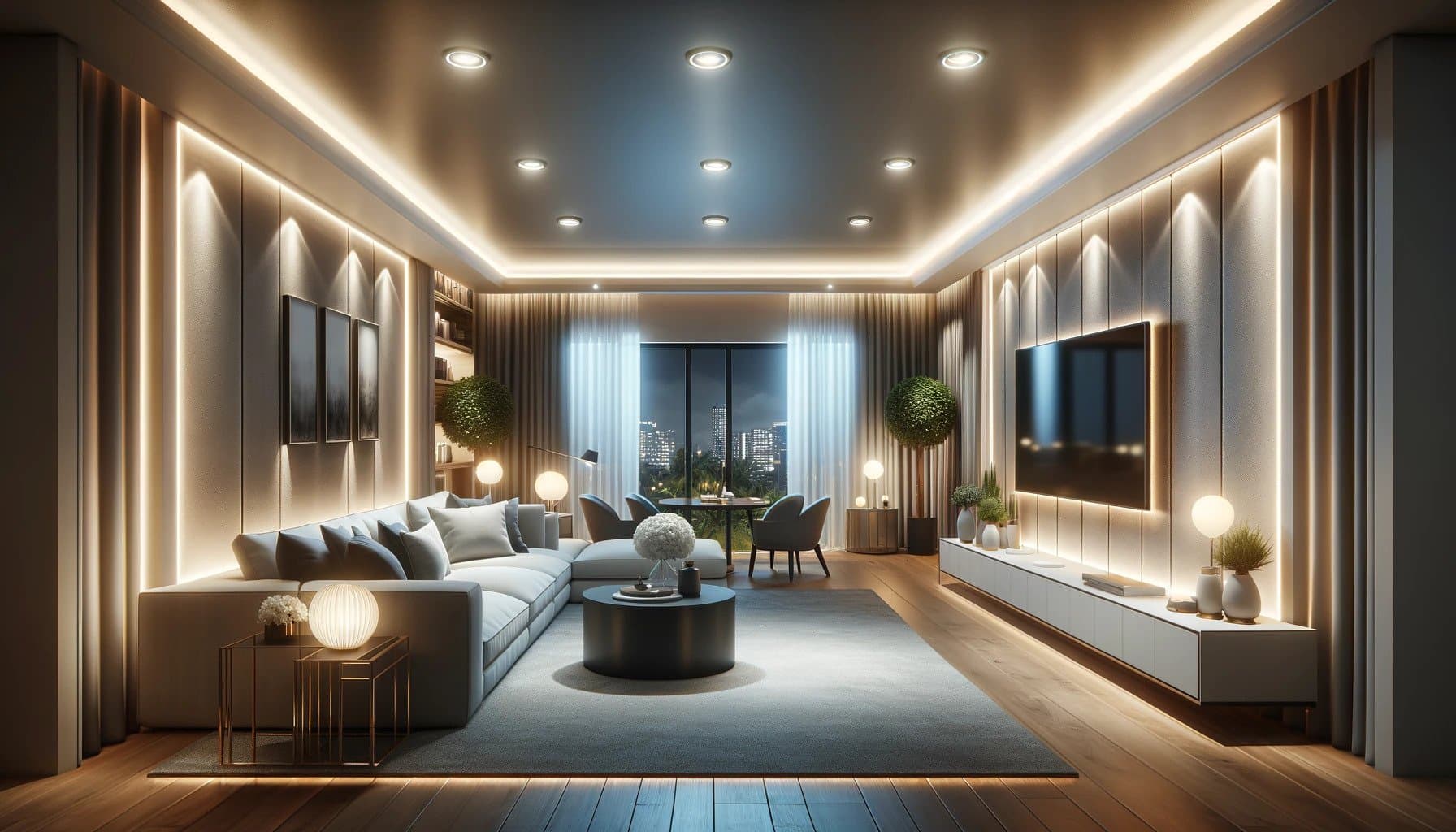
The Power of LED Lighting in Modern Homes
ConstructionX writes for owners who want a clearer way to build. A custom home, major addition, cottage, rescue project, or performance upgrade is not a simple purchase. It is a sequence of decisions that affect cost, comfort, schedule, durability, and trust. The strongest projects are not the ones that rush into construction. They are the ones that define scope, pressure test assumptions, and make the important decisions visible before the site starts moving.
The goal of this article is not to sell a shortcut. It is to explain the decision in plain language so homeowners, builders, architects, and developers can understand what is at stake. Better information creates better conversations. Better conversations create better scopes. Better scopes create stronger projects.
Lighting changes how a home feels
Lighting is one of the most underestimated parts of residential design. It affects comfort, mood, safety, energy use, resale impression, and how the architecture is experienced. A beautiful room can feel flat if lighting is poorly planned. A simple room can feel refined when lighting is layered properly.
LED lighting has changed what is possible because it combines efficiency, flexibility, long life, and control. But the technology is only part of the story. The real value comes from planning the lighting system around how people live in the home.
A custom home should not be lit by habit. It should be lit by purpose. Kitchens, great rooms, bathrooms, hallways, stairs, bedrooms, exterior entries, garages, mechanical spaces, decks, and landscape areas all need different thinking.
Efficiency is only the starting point
LEDs are widely recognized for energy efficiency. Natural Resources Canada states that ENERGY STAR certified LEDs are much more efficient than incandescent bulbs and last much longer. That makes them a practical choice for reducing energy use and maintenance.
In a modern home, however, the benefit goes beyond the utility bill. LEDs produce less heat than older lighting types, allow smaller fixtures, support dimming and scene control, and can be integrated into millwork, stairs, ceilings, mirrors, closets, exterior details, and landscape features.
Efficiency matters, but lighting quality matters too. A low quality LED can create glare, poor colour, flicker, uneven dimming, or a cold feel. Good lighting design looks at performance, not just wattage.
Layered lighting creates better rooms
Most rooms need more than one type of light. Ambient lighting provides general brightness. Task lighting supports specific work like cooking, reading, grooming, or desk use. Accent lighting highlights architecture, artwork, stone, cabinetry, stairs, or exterior features. Decorative lighting adds personality.
A room with only pot lights can feel harsh. A room with only decorative fixtures can be too dim for daily use. A layered plan gives the owner control. The space can be bright for cleaning, focused for work, soft for evenings, and dramatic for entertaining.
LED technology makes layering easier because fixtures are compact and controllable. The design still needs intention. Fixture placement, beam spread, colour temperature, dimming performance, and switching zones all matter.
Colour temperature affects comfort
Colour temperature describes whether light feels warm, neutral, or cool. Warm light can feel comfortable and residential. Cooler light can feel crisp but may become harsh if used poorly. Different areas of the home may need different choices.
A kitchen may need clean task lighting over prep areas while still feeling warm in the evening. Bathrooms need accurate grooming light without making the space feel clinical. Bedrooms need softer light. Exterior areas need visibility without glare. Art and materials need lighting that respects their colour.
The goal is consistency and control. A home should not feel like a mix of random bulbs. LED selections should be coordinated so rooms feel intentional.
Dimming and controls matter
Not every LED dims well. Not every dimmer works with every fixture. Poor compatibility can create flicker, buzzing, limited dimming range, or premature product issues. This is why lighting should be planned with the electrical scope, not guessed at the end.
Smart controls can improve convenience when they are kept practical. Scenes for cooking, entertaining, evening, movie time, exterior security, or nighttime pathways can make the home easier to live in. Occupancy sensors can support closets, garages, mudrooms, and utility spaces. Timers and astronomical controls can support exterior lighting.
Controls should simplify life, not confuse it. A good lighting plan balances flexibility with usability.
LEDs support safety and aging in place
Lighting is also a safety system. Stairs, entries, hallways, bathrooms, garages, mechanical rooms, exterior walkways, driveways, and landscape paths need visibility. Poor lighting can create trip hazards and discomfort, especially for children, guests, and aging family members.
LED strip lighting, low level path lighting, stair lighting, under cabinet lighting, and motion activated lighting can improve safety without making the home feel institutional. These details are easiest to integrate during construction when wiring and blocking can be planned.
For clients thinking long term, lighting should be part of accessibility and aging in place planning. Good lighting helps people use the home confidently as needs change.
Exterior lighting should be controlled
Exterior LED lighting can improve curb appeal, security, and outdoor living. It can highlight architecture, entrances, walkways, retaining walls, decks, gardens, and landscape features. It can also become excessive if not controlled.
Glare, light spill, poor fixture placement, and overly bright colour temperatures can make exterior spaces uncomfortable. A better approach uses lower intensity, proper shielding, thoughtful placement, and clear zones.
For rural, waterfront, and mountain view properties, exterior lighting should respect the environment and night sky. More light is not always better. Better placed light is better.
Plan lighting before walls close
Lighting is much easier to improve before construction is complete. Fixture locations, switch groups, dimmers, smart controls, low voltage wiring, exterior circuits, cabinet lighting, mirror lighting, stair lighting, and landscape rough ins all benefit from early planning.
Late lighting decisions create compromises. Wires may be harder to route. Switches may land in poor locations. Millwork may not support integrated light. Exterior features may be finished before rough ins are considered.
A strong custom home process includes lighting conversations during design and preconstruction. That gives the owner better options and fewer expensive changes.
What owners should ask
Owners should ask how lighting will be layered, which areas need task lighting, what colour temperature is recommended, whether fixtures are dimmable, how controls will be organized, where exterior lighting is planned, and what lighting should be roughed in for future use.
They should also ask whether the lighting plan matches the home’s materials and lifestyle. A modern home with large glass, dark finishes, vaulted spaces, and open rooms may need different lighting than a traditional layout.
Good lighting is not an accessory. It is part of the architecture.
How to use this article in a real project
The best use of this article is as a planning filter, not as a script. Every project has its own site, budget, ownership structure, design intent, trade conditions, and risk profile. The point is to help owners slow down the right decision before it becomes expensive. For The Power of LED Lighting in Modern Homes, the practical focus is lighting planning. That means the conversation should move beyond opinion and into evidence.
Start by asking what information is already known. Then separate assumptions from confirmed facts. A client may know the preferred style of home, but not the site work required. They may know the budget target, but not the cost of the mechanical standard they want. They may know they are frustrated with a project, but not which failures are contractual, technical, financial, or communication related. Clarity begins when those categories are separated.
What should be documented
For this topic, documentation should focus on layers, colour temperature, controls, exterior lighting, and safety. The record does not need to be complicated, but it does need to be useful. A good project record includes the current decision, the reason for the decision, the budget effect, the schedule effect, the person responsible, the information still missing, and the next action.
That kind of record protects everyone. It helps the owner remember what was agreed. It helps the builder coordinate trades. It helps designers and engineers understand constraints. It helps future project managers see why the project moved in a certain direction. Most construction conflict is made worse by weak memory. Documentation reduces that problem.
The questions worth asking early
Before committing, ask what could make the decision wrong. That question is more useful than asking for reassurance. What condition could change the cost? What trade input is still missing? What approval could affect timing? What selection has not been made? What performance expectation has not been translated into a specification? What responsibility is still unclear?
The answer may not stop the project. It may simply show where contingency, planning, or further review is needed. The goal is not to eliminate every unknown. That is impossible in construction. The goal is to prevent avoidable unknowns from being treated as facts.
The risk of moving too fast
The main risk in this topic is treating lighting as a late fixture package. Fast decisions can feel efficient, especially when the owner is eager to move forward. But construction punishes weak assumptions. Once materials are ordered, trades are scheduled, permits are underway, or walls are closed, the cost of correction rises.
A disciplined pause is not the same as delay. It is a controlled step that confirms the work can proceed with fewer surprises. Strong builders do this naturally. They do not treat questions as obstacles. They treat questions as protection for the client and the project.
What a strong next step looks like
A strong next step is specific. It names what will be reviewed, who will review it, what information is needed, and what decision will follow. For some projects that may be a budgetary review. For others it may be a site walk, design meeting, trade quote, legal conversation, energy performance review, or construction rescue assessment.
Avoid vague next steps like “get a better price” or “figure it out later.” Those phrases push risk downstream. A better next step turns uncertainty into an action. That is how a project moves forward with confidence instead of pressure.
A better way to start
The safest time to improve a project is before pressure takes over. That does not mean every detail must be solved on day one. It means the project needs a controlled path for making decisions, recording assumptions, pricing real scope, and protecting the client from avoidable surprises.
ConstructionX approaches custom home building, construction management, home efficiency upgrades, additions, landscape construction, and project rescue through that lens. The work is practical. The standard is premium. The process is built around clarity, documentation, and building science rather than vague promises.
If you are planning a new home, trying to understand a budget, comparing builders, or dealing with a project that has lost control, the next step is not to collect another loose opinion. The next step is to organize the facts, define the risks, and create a plan that can actually be built.
Practical review before you decide
Before moving forward, slow the decision down enough to test the facts. Confirm the goal, the project type, the budget range, the site reality, the required approvals, and the decisions that are still open. Ask what is known, what is assumed, and what could change once design, engineering, trades, or site conditions are reviewed.
This is not about creating paperwork for its own sake. It is about preventing expensive confusion. The strongest construction decisions are usually made before pressure arrives. A clear scope, realistic budget, documented assumptions, and a disciplined next step give the owner a better chance of protecting time, money, and trust.
The owner should also decide what proof is needed before approval. That proof may be a written scope, a revised drawing, a trade quote, an engineering note, a permit path, an allowance schedule, a site photo record, a product specification, or a meeting summary. The exact item depends on the project, but the principle is the same. A decision should be supported by enough information that everyone understands what is being approved and what still needs attention.
When a project uses that discipline, the conversation changes. The client is not relying on sales confidence. The builder is not relying on memory. The team is working from a shared record. That is what turns a good idea into a construction decision that can survive pressure.
Use this resource to prepare better questions before a project conversation. Final project decisions still depend on site, scope, budget, schedule, and qualified professional review.